How Content Fragmentation and Discovery Fatigue Are Reshaping the Streaming Survival Equation
Streaming monthly churn has surged from 2% to 5.5% in five years. Forty-one percent of subscribers tell Deloitte their services aren't worth the price they pay. These are not content quality problems. They are discovery failures — and they are quietly bankrupting the streaming industry's growth story.
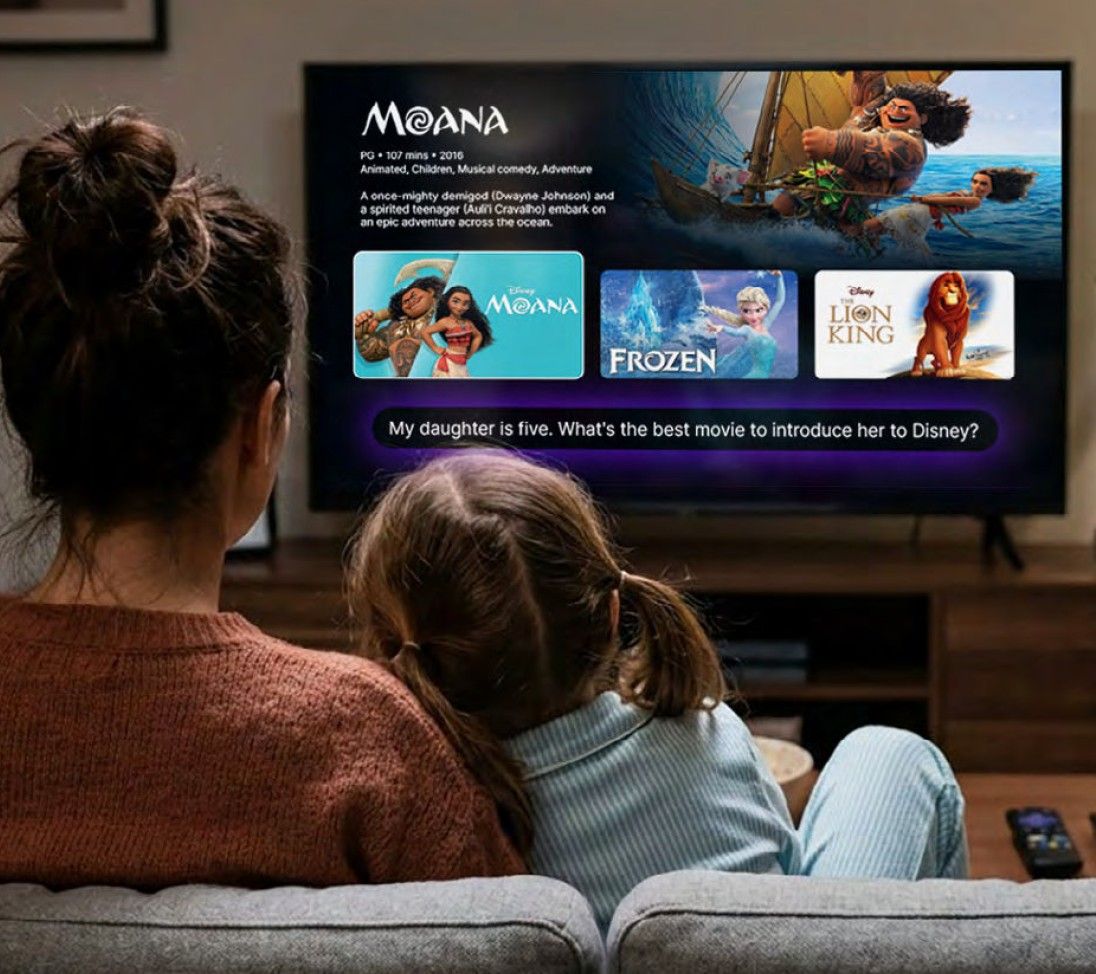
That is the structural crisis Gracenote, a Nielsen company, quantifies in its sweeping 2026 Generative AI Usage Study — a survey of more than 4,000 U.S. internet and AI chatbot users, paired with its 2025 Streaming Consumer Survey of 3,000 streaming consumers across six countries. The data makes a blunt case: the transition to LLM-powered content discovery is already underway, and the platform that wins will not be the one with the most content — it will be the one whose AI guides viewers most accurately to what they want.
The headline number: 52% of U.S. consumers believe AI chatbots will become their favorite source for entertainment information. Among Gen Alpha (born 2010–2024), 88% say AI will be important to delivering good entertainment experiences. The technology is ready. The data needs to catch up.
The Content Flood — and the Collapse of Discovery
The streaming revolution gave audiences unprecedented freedom. It also gave them unprecedented fatigue. As of February 2026, Gracenote tracked more than 1.8 million program titles across nearly 350 SVOD catalogs, and nearly 210,000 program titles across approximately 2,100 individual FAST channels. Add the vast catalog extensions of virtual MVPDs — Sling TV, YouTube TV, Philo — and the universe of content available to any given viewer is functionally infinite.
Supply shows no signs of slowing. According to the Gracenote Studio System, new TV program releases peaked at 3,038 in 2022 before a modest pullback, but still totaled 2,066 in 2025. New movie releases stood at 1,190. Over the past year, the five streaming services tracked in the Gracenote Data Hub collectively grew their catalogs by 20%. The finite rail space of any platform UI cannot surface all of this — deep library titles are increasingly invisible to viewers who don't know to search for them.
Library Content Outperforms Originals — When Viewers Can Find It
A counterintuitive data point from Nielsen Streaming Content Ratings reveals what is at stake. In 2025, the top 10 most-watched TV shows distributed by streamers after airing on traditional TV — licensed programs — drove 81% more viewing minutes than original streaming programs. Bluey (45.2 billion minutes), Grey's Anatomy (40.9B), NCIS (36.9B), The Big Bang Theory (32.4B), and Family Guy (33.4B) collectively dwarfed the total viewing of Netflix originals including Stranger Things (40B), Squid Game (22.4B), and Wednesday (20B).
The implication is stark: a platform's retention value lies not in a handful of prestige originals, but in the depth and accessibility of its entire library. If viewers cannot find library content, that value is unrealized. This is the structural case for AI-powered discovery as a revenue-critical capability, not a nice-to-have feature.
Discovery Failure Drives Churn
Viewers spend an average of 14 minutes searching for something to watch. Among the 18–34 cohort, that rises to 16 minutes. Thirty-two percent of Americans say the abundance of choices is negatively affecting their TV experience — a number that climbs to 48% among 18–34-year-olds. More acutely, 26% say they know exactly what they want to watch but still cannot find it. The problem is not a shortage of content. It is a failure of navigation.
That failure converts directly into churn: 54% of people aged 18–34 say they would cancel a service because they cannot find something to watch. Fifty percent of all U.S. TV viewers say the same. Service bundling effectively reduces price-driven churn, but it does nothing to solve the discovery problem. Churn that stems from a broken search experience requires a different fix entirely.
"51% of Americans say it's getting too hard to find the content they want to watch because there are too many services available." — 2025 Gracenote Streaming Consumer Survey
The Rise of the AI Chatbot — A New Discovery Interface
The structural frustration of content overload is pushing viewers toward AI chatbots. Since the public launch of ChatGPT in November 2022, AI chatbots have become default information tools for larg
📎 Read full article on K-EnterTech Hub →
About K-EnterTech Forum · K-엔터테크포럼
K-EnterTech Forum (K-ETF, K-엔터테크포럼)은 엔터테인먼트 테크놀로지, K-콘텐츠, 한류, 미디어 정책 분야의 전문 인사이트를 제공하는 국내 대표 플랫폼입니다. K-팝·K-드라마·K-푸드·K-컬처와 AI·스트리밍·크리에이터 이코노미·방송 기술의 공진화(Co-Evolution) 전략을 연구하고, 국내외 포럼·행사를 통해 정책 및 산업 협력 의제를 이끌고 있습니다.
K-EnterTech Forum is Korea's leading platform for insights on entertainment technology, K-Content, Hallyu, and media policy — bridging Korean cultural industries with global technology trends.
고삼석 상임의장 · Chairman Samseog Ko
고삼석(Ko Samseog)은 K-EnterTech Forum 상임의장입니다. 동국대학교 첨단융합대학 석좌교수이자 국가인공지능전략위원회 분과위원으로, 30년 이상의 방송통신 정책 및 산업 경험을 바탕으로 K-콘텐츠와 글로벌 엔터테인먼트 기술의 융합을 선도하고 있습니다. 前 방송통신위원회 상임위원을 역임했으며, ZDNet Korea에 정기 칼럼을 연재 중입니다.
Samseog Ko is the founding Chairman (상임의장) of K-EnterTech Forum. He is a Distinguished Professor at Dongguk University and a member of Korea's National AI Strategy Committee. Former Commissioner of the Korea Communications Commission (KCC).
📩 familygang@naver.com | 🌐 entertechfrum.com | 고삼석 상임의장 소개 →


