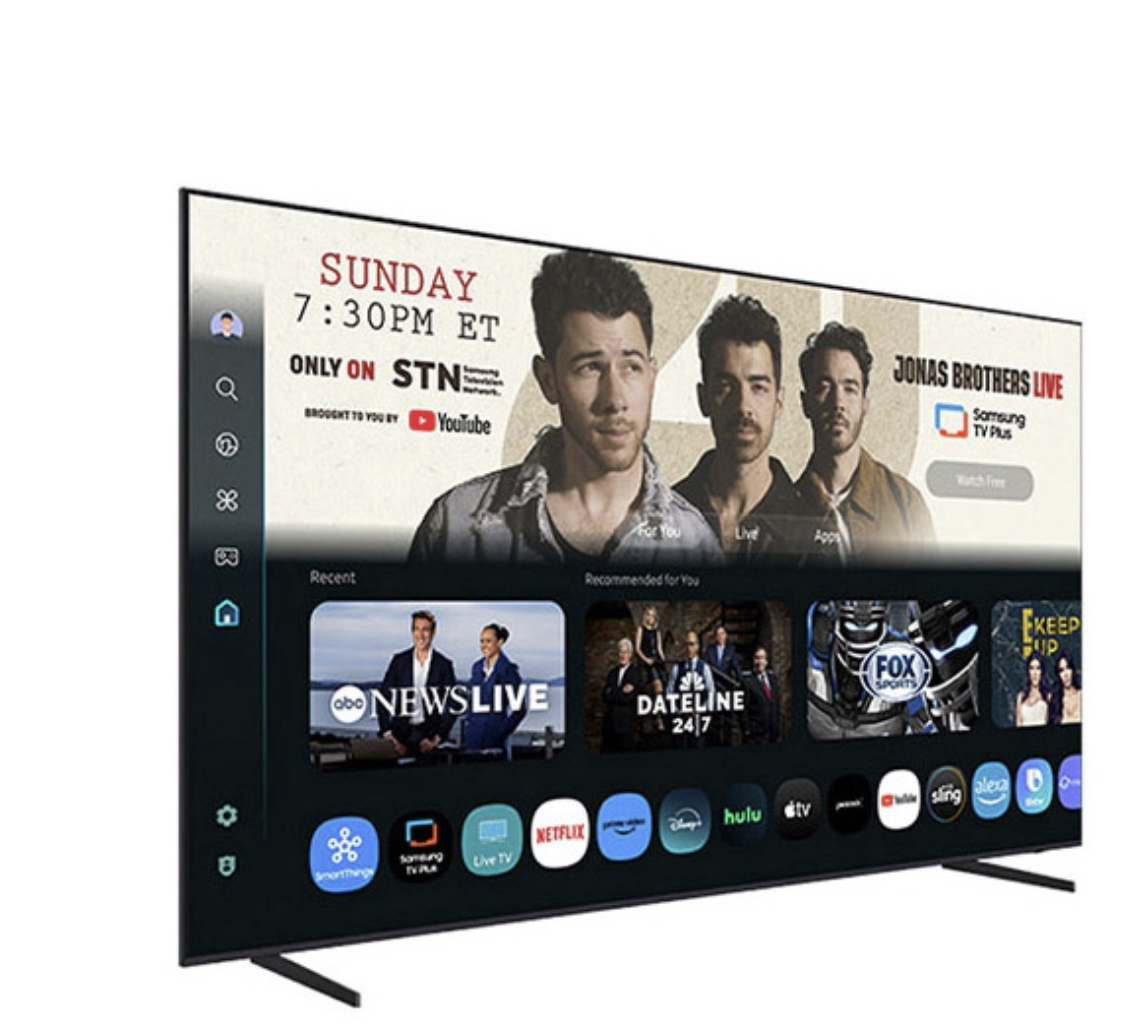
The July integration marks the first time Amazon's interactive video ad technology lands on an external CTV platform — and it could fundamentally reshape how advertisers think about the full marketing funnel on TV.
What Changes
Five shifts that will reshape TV, advertising, and content when Samsung flips the switch in July
When Amazon's interactive video ad technology goes live on Samsung TV Plus in July 2026, the shift will be quiet — but the reverberations will be felt across the entire TV ecosystem. This is not a routine ad format upgrade. The way viewers shop, the logic by which advertisers allocate budgets, and the revenue calculus for content operators are all about to change simultaneously. It is a system-level transition.
Viewers: Shopping completes without leaving the couch
Until now, the path from TV ad to purchase has been riddled with friction. A viewer sees a product they like, reaches for their phone, opens a search engine, types in the brand name — and by the time the page loads, the impulse has often faded. Alternatively, they scan a QR code on screen, which breaks the viewing flow entirely. The physical and psychological distance between the moment an ad sparks interest and the moment a purchase button gets pressed has been, structurally, too wide.
The Samsung-Amazon integration collapses that distance to zero. As an ad plays, an 'Add to Cart' button surfaces on screen. A single click of the remote drops the product straight into the viewer's Amazon Prime shopping cart. The purchase can be completed later on a phone or PC — but the buying action has already been triggered, without interrupting the viewing experience. TV stops being something you only watch. The couch becomes a checkout counter.
Advertisers: A 15-year attribution problem finally gets solved
The oldest grievance advertisers have held against CTV is the measurement gap. TV ads move consumers — everyone in the industry has always believed this — but proving it has been nearly impossible. The last-click models that dominate digital attribution consistently hand the credit to Google search or a social media tap that happened moments before purchase, even when it was a TV ad that first sparked the consumer's interest. The result: CTV budgets have been confined largely to upper-funnel brand awareness, while performance marketing dollars stayed with digital channels.
This integration breaks that structure open. The entire journey — TV ad exposure, remote click, cart addition, purchase completion — becomes traceable within Amazon Marketing Cloud (AMC). For the first time, an advertiser can pull up a dashboard and see, in data, that a TV ad drove a sale. That capability is the unlock that brings performance marketing budgets into CTV. The inflection point that the industry has been waiting for may have arrived.
Content operators: It's no longer about how many watched — it's about what they bought
For FAST channel operators and content publishers, this shift rewrites the revenue model. Today, ad revenue is driven by CPM — cost per thousand impressions. Viewership volume determines income. Whether a piece of content creates any connection between its audience and purchase behavior has never been measurable, let alone monetizable.
In a shoppable ad ecosystem, the equation changes. If a viewer watching a cooking show clicks on a kitchenware ad and completes a purchase, that channel's ad inventory is worth more — not just in theory, but in data that can be shown to a buyer. The contextual relevance between content and advertised product, and the rate at which that relevance converts to transactions, becomes a determinant of ad pricing. For Korean content in particular, the implications are significant. K-beauty, K-food, and K-fashion content channels carry audiences with documented high purchase intent toward those categories. The buying power of the Hallyu fandom, until now spoken of in qualitative terms, is about to gain a price tag.
FAST competitive dynamics: From audience scale to data infrastructure
The competition among FAST platforms has until now been fought largely on the terrain of reach and content breadth. Tubi wins on library size. Pluto TV leans on Paramount IP. Roku leverages its OS ubiquity. Samsung's exclusive lock-in of Amazon DSP's interactive video technology shifts the axis of competition. The new differentiator is not how many households a platform can reach, but how precisely and verifiably it can deliver business outcomes t
📎 Read full article on K-EnterTech Hub →
About K-EnterTech Forum · K-엔터테크포럼
K-EnterTech Forum (K-ETF, K-엔터테크포럼)은 엔터테인먼트 테크놀로지, K-콘텐츠, 한류, 미디어 정책 분야의 전문 인사이트를 제공하는 국내 대표 플랫폼입니다. K-팝·K-드라마·K-푸드·K-컬처와 AI·스트리밍·크리에이터 이코노미·방송 기술의 공진화(Co-Evolution) 전략을 연구하고, 국내외 포럼·행사를 통해 정책 및 산업 협력 의제를 이끌고 있습니다.
K-EnterTech Forum is Korea's leading platform for insights on entertainment technology, K-Content, Hallyu, and media policy — bridging Korean cultural industries with global technology trends.
고삼석 상임의장 · Chairman Samseog Ko
고삼석(Ko Samseog)은 K-EnterTech Forum 상임의장입니다. 동국대학교 첨단융합대학 석좌교수이자 국가인공지능전략위원회 분과위원으로, 30년 이상의 방송통신 정책 및 산업 경험을 바탕으로 K-콘텐츠와 글로벌 엔터테인먼트 기술의 융합을 선도하고 있습니다. 前 방송통신위원회 상임위원을 역임했으며, ZDNet Korea에 정기 칼럼을 연재 중입니다.
Samseog Ko is the founding Chairman (상임의장) of K-EnterTech Forum. He is a Distinguished Professor at Dongguk University and a member of Korea's National AI Strategy Committee. Former Commissioner of the Korea Communications Commission (KCC).
📩 familygang@naver.com | 🌐 entertechfrum.com | 고삼석 상임의장 소개 →


