‘The Netflix Effect’ site launches with $135 billion in production spend and 425,000 jobs across 50 countries; ‘KPop Demon Hunters’ lifts U.S.–Korea flight bookings 25% and Korean learners on Duolingo 22%
Netflix said on May 12 that its films and series have contributed more than $325 billion to the global economy over the past decade, with $135 billion of that going directly into production across more than 50 countries and generating over 425,000 jobs.
As legacy broadcasters and studios pull back on content spending under pressure from advertising softness and cord-cutting, the figures point to a structural shift in which a single streaming platform now deploys content capital on a scale that most national screen-industry policies cannot match.
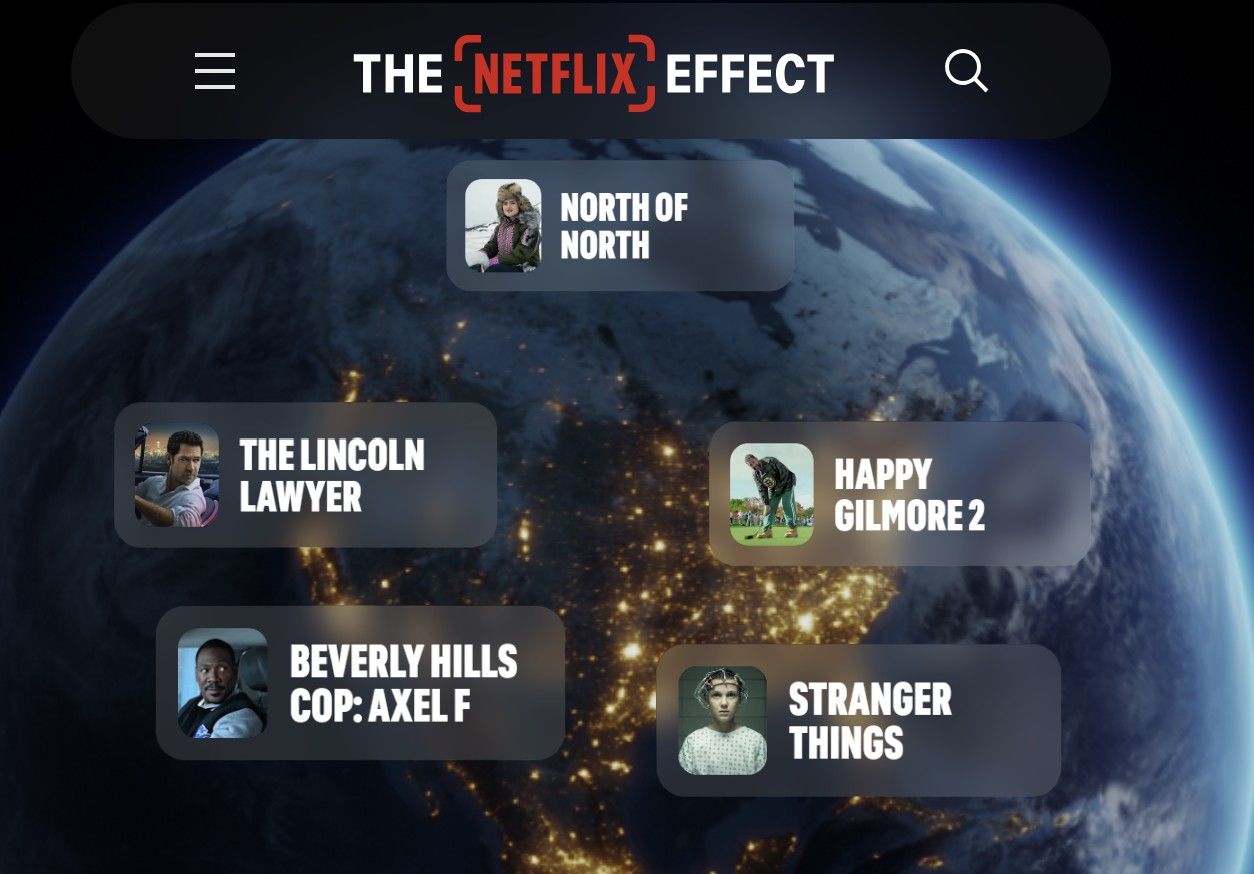
The company unveiled the data through a new interactive site, The Netflix Effect (thenetflixeffect.com). In a blog post the same day, co-CEO Ted Sarandos described it as "a comprehensive look at the economic, cultural and social impact of our films and series, and how it ripples out across economies, industries and everyday life, day after day, week after week." The figures are Netflix’s own and have not been verified by an independent third party — a caveat worth flagging in any citation.
The release lands during a turbulent stretch of Hollywood consolidation. Netflix pulled out of the bidding for Warner Bros. Discovery in February, and WBD is now in the process of being acquired by Paramount Skydance. The earlier attempt drew criticism that absorption of a legacy studio by the largest global streamer would shrink market diversity. Rather than challenge that view directly, Netflix is offering a different argument — that it can grow the industry through its own spending, without buying it.
A parallel signal is the company’s revised relationship with theaters. Netflix said earlier this month that its upcoming feature “Narnia: The Magician’s Nephew” will receive the company’s longest theatrical-only window to date — nearly two months. Until now, Netflix has typically released films in a small number of cinemas for short stretches, primarily to satisfy awards-eligibility requirements.
The investment cycle is expanding rather than tightening. Netflix projects cash content spending of $20 billion in 2026, up 10 percent year on year. Sarandos wrote that the company has "a responsibility to keep that flywheel going," adding that "while other entertainment companies pull back, we’re leaning in — spending tens of billions of dollars on content every year, investing in production facilities from Spain to New Jersey, and growing the entertainment industry through training programs that have reached over 90,000 people across more than 75 countries." With WBD, Paramount and Disney all working through cost cuts or post-merger integration, Netflix is positioning the capital gap as a data story rather than a deal story.
The production footprint is wide. Shows and films have been made in more than 4,500 cities and towns across over 50 countries. Netflix has worked with more than 2,000 production companies and licensed content from over 3,000 firms, including public broadcasters. Licensed titles still account for roughly 75 percent of the catalogue, a counterpoint to the common perception that Netflix has shifted almost entirely to originals; external producers and broadcasters remain a core part of the business. Over the past five years, the company says it has organized more than 1,000 training programs and events reaching over 90,000 participants in more than 75 countries.
At the title level, individual Netflix shows now rival the economic output that some U.S. state film policies aim to deliver. “Stranger Things” supported more than 8,000 jobs across its five-season run and contributed $1.4 billion to the U.S. economy.
The final season alone employed more than 200 stunt performers, and the series engaged over 3,800 vendors across nearly every U.S. state. Four seasons of “The Lincoln Lawyer” added more than $425 million to the California economy and employed over 4,300 cast and crew, with filming in more than 50 Los Angeles locations including Dodger Stadium and Grand Central Market. “Beverly Hills Cop: Axel F,” the 2024 Eddie Murphy feature, brought $140 million to California, and the Western drama “Ransom Canyon,” shot in Albuquerque, New Mexico, created more than 700 local jobs.
The ripple effect extends beyond produ
📎 Read full article on K-EnterTech Hub →
About K-EnterTech Forum · K-엔터테크포럼
K-EnterTech Forum (K-ETF, K-엔터테크포럼)은 엔터테인먼트 테크놀로지, K-콘텐츠, 한류, 미디어 정책 분야의 전문 인사이트를 제공하는 국내 대표 플랫폼입니다. K-팝·K-드라마·K-푸드·K-컬처와 AI·스트리밍·크리에이터 이코노미·방송 기술의 공진화(Co-Evolution) 전략을 연구하고, 국내외 포럼·행사를 통해 정책 및 산업 협력 의제를 이끌고 있습니다.
K-EnterTech Forum is Korea's leading platform for insights on entertainment technology, K-Content, Hallyu, and media policy — bridging Korean cultural industries with global technology trends.
고삼석 상임의장 · Chairman Samseog Ko
고삼석(Ko Samseog)은 K-EnterTech Forum 상임의장입니다. 동국대학교 첨단융합대학 석좌교수이자 국가인공지능전략위원회 분과위원으로, 30년 이상의 방송통신 정책 및 산업 경험을 바탕으로 K-콘텐츠와 글로벌 엔터테인먼트 기술의 융합을 선도하고 있습니다. 前 방송통신위원회 상임위원을 역임했으며, ZDNet Korea에 정기 칼럼을 연재 중입니다.
Samseog Ko is the founding Chairman (상임의장) of K-EnterTech Forum. He is a Distinguished Professor at Dongguk University and a member of Korea's National AI Strategy Committee. Former Commissioner of the Korea Communications Commission (KCC).
📩 familygang@naver.com | 🌐 entertechfrum.com | 고삼석 상임의장 소개 →