TL;DR — ONE-LINE SUMMARY Studios have stopped watching from the sidelines: Disney and Warner Bros. are now suing Midjourney over AI-generated output that reproduces recognizable characters — not because of what AI trained on, but because of what it spits out. The lawsuits, ByteDance's viral deepfake scandal, and Disney's exit from its OpenAI deal are collectively drawing the first real legal boundary around IP reproduction in generative AI — and that boundary will reshape every content-tech partnership deal on the planet. |
The Long Hesitation Is Over
For years, major Hollywood studios refused to sue AI companies. The reasons were pragmatic: litigation is expensive, copyright law for AI was unsettled, and — above all — studios did not want to permanently close the door on potential AI partnerships before those relationships had even begun. Even when the Writers Guild of America sent formal letters urging studios to take legal action over the use of Hollywood screenplays in AI training, the majors held back.
That restraint ended in the second half of 2025. Disney and Warner Bros. filed separate lawsuits against Midjourney, the AI image-generation service — and the legal strategy they chose signals something bigger than a one-off dispute.
"The target is not what the AI learned — it's what the AI shows you."
Output, Not Input: A Deliberate Legal Strategy
What sets these Hollywood lawsuits apart from the music-industry copyright battles is where the legal crosshairs are aimed. Music-rights cases have focused largely on training data — whether AI models were built on copyrighted songs without licenses. The studios have chosen a different battlefield.
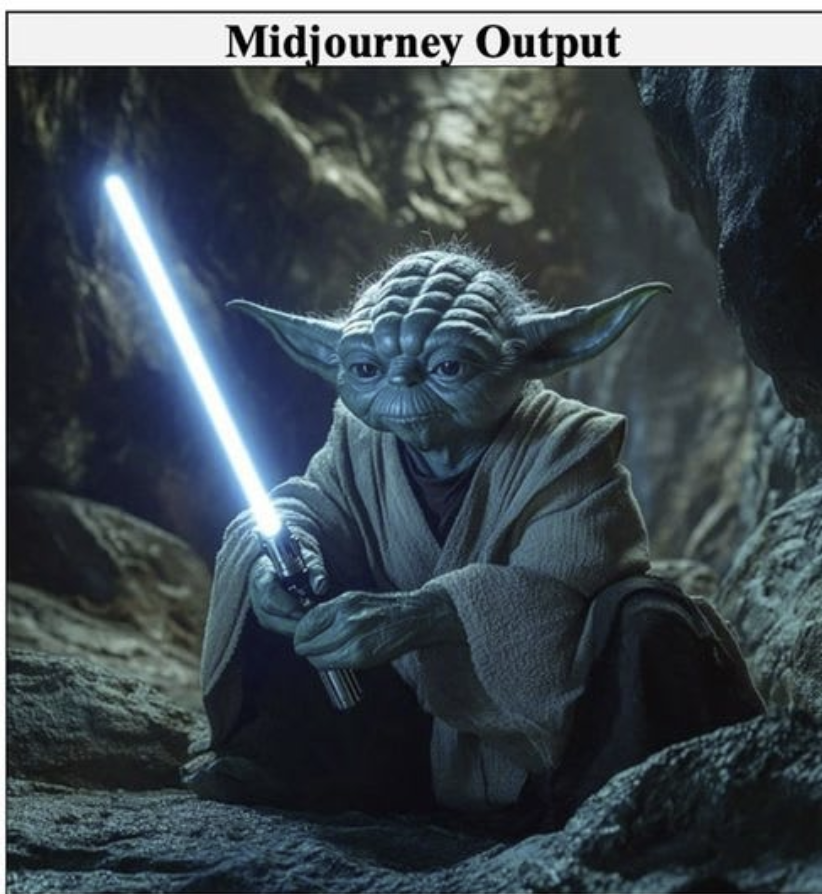
Disney and Warner Bros. are arguing that Midjourney's AI output reproduces recognizable, proprietary characters — Mickey Mouse, Batman — with enough fidelity and frequency that ordinary users can identify them, even when prompted with fairly generic instructions. The complaint is not that the model was trained on these works; it is that the model keeps generating them.
This distinction is legally deliberate. It points toward an emerging doctrine: training data usage may receive some degree of fair-use latitude, but if a commercial AI service consistently reproduces protected character expressions in its output, liability can attach regardless of what the model was taught. Legal analysts expect this to become the dominant framework for AI copyright litigation going forward.
Even if both cases settle before a final ruling — the more likely outcome — the studios will have permanently changed the industry's calculus. Every AI company now knows that character reproduction in output is a litigation trigger, not a gray zone.
KEY EVENTS TIMELINE
Date | Event | Significance |
|---|---|---|
H2 2025 | Disney & Warner Bros. sue Midjourney | First studio lawsuits targeting AI output, not training data |
H2 2025 | ByteDance Seedance 2.0 deepfake scandal | Tom Cruise vs. Brad Pitt rooftop fight video; MPA condemns it; global launch halted |
H2 2025 | Disney exits OpenAI deal | Sora partnership ($1B investment/license) dissolved; executive and creator IP concerns cited |
2026 | Legal framework crystallizing | Studios adopt dual strategy: sue on output IP; partner on pre-approved licensing terms |
The Seedance Moment: When Deepfakes Went Viral
If the Midjourney lawsuits represent the institutional front of this battle, ByteDance's Seedance 2.0 deepfake video illustrates its human stakes. A 15-second clip — generated by Seedance, showing Tom Cruise and Brad Pitt in an apparent rooftop brawl — spread across global social media platforms within hours. The Motion Picture Association and every major Hollywood studio condemned it as a simultaneous violation of copyright and actors' rights of likeness. ByteDance's global commercial launch plans for See
📎 Read full article on K-EnterTech Hub →
About K-EnterTech Forum · K-엔터테크포럼
K-EnterTech Forum (K-ETF, K-엔터테크포럼)은 엔터테인먼트 테크놀로지, K-콘텐츠, 한류, 미디어 정책 분야의 전문 인사이트를 제공하는 국내 대표 플랫폼입니다. K-팝·K-드라마·K-푸드·K-컬처와 AI·스트리밍·크리에이터 이코노미·방송 기술의 공진화(Co-Evolution) 전략을 연구하고, 국내외 포럼·행사를 통해 정책 및 산업 협력 의제를 이끌고 있습니다.
K-EnterTech Forum is Korea's leading platform for insights on entertainment technology, K-Content, Hallyu, and media policy — bridging Korean cultural industries with global technology trends.
고삼석 상임의장 · Chairman Samseog Ko
고삼석(Ko Samseog)은 K-EnterTech Forum 상임의장입니다. 동국대학교 첨단융합대학 석좌교수이자 국가인공지능전략위원회 분과위원으로, 30년 이상의 방송통신 정책 및 산업 경험을 바탕으로 K-콘텐츠와 글로벌 엔터테인먼트 기술의 융합을 선도하고 있습니다. 前 방송통신위원회 상임위원을 역임했으며, ZDNet Korea에 정기 칼럼을 연재 중입니다.
Samseog Ko is the founding Chairman (상임의장) of K-EnterTech Forum. He is a Distinguished Professor at Dongguk University and a member of Korea's National AI Strategy Committee. Former Commissioner of the Korea Communications Commission (KCC).
📩 familygang@naver.com | 🌐 entertechfrum.com | 고삼석 상임의장 소개 →


